
Today, people use the internet to discover businesses, compare products, read reviews, and make buying decisions. This has made an online presence an important part of running a business.
But how do businesses reach people online? The answer is digital marketing.
Whether you run a small shop, an online store, a startup, or an established company, understanding digital marketing can help you make better decisions about your online presence.
In this guide, we’ll explain what digital marketing means, how it works, its main types, and the basic terms every beginner should understand.
What Is Digital Marketing?
Digital marketing is the promotion of products, services, or brands through digital channels such as search engines, websites, social media, email, and online advertising.
For example, when a business appears on Google, shares a product video on Instagram, sends a promotional email, or runs a Google Ads campaign, it is using digital marketing.
Unlike marketing methods that mainly rely on offline channels, digital marketing allows businesses to connect with audiences online and measure many aspects of their campaigns.
How Does Digital Marketing Work?
Digital marketing is not just about posting content or running advertisements. It involves understanding an audience and guiding potential customers towards a useful action.
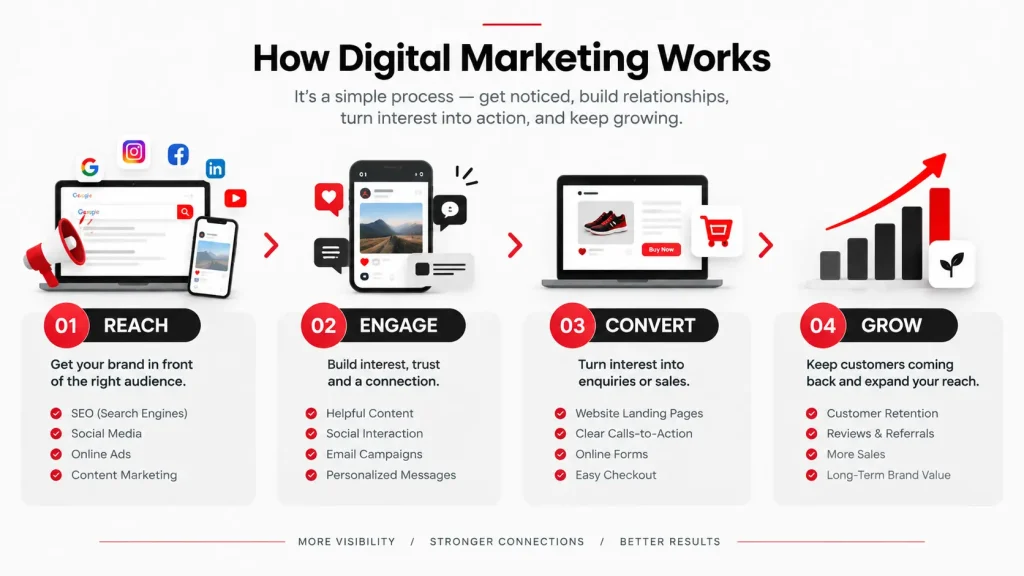
A simple way to understand the process is through four stages:
1. Reach
The first step is helping the right people discover your business. This can happen through search engines, social media, paid advertisements, or other online channels.
2. Engage
Once people discover your brand, useful content, helpful information, and clear communication can encourage them to learn more.
3. Convert
The next step is encouraging interested people to take action, such as making a purchase, booking a consultation, filling out a form, or contacting your business.
4. Grow
Businesses can review campaign performance, understand customer behaviour, improve their marketing efforts, and build stronger customer relationships over time.
The exact process varies depending on the business, its audience, and its goals.
What Are the Main Types of Digital Marketing?
Digital marketing includes several different areas. Businesses can use one or combine multiple types depending on their needs.
1. Search Engine Optimization (SEO)
SEO helps improve a website’s visibility in unpaid search engine results. It includes improving website content, technical performance, and other factors that help search engines understand a website.
2. Social Media Marketing
Social media marketing involves using platforms such as Instagram, Facebook, LinkedIn, and other social networks to publish content, communicate with audiences, and build brand awareness.
3. Paid Advertising and PPC
Paid advertising allows businesses to promote their products or services through paid placements. Google Ads and social media advertising are common examples.
PPC, or pay-per-click, is an advertising model in which advertisers generally pay when someone clicks on their ad.
4. Content Marketing
Content marketing focuses on creating useful content, such as blog posts, videos, guides, and infographics, to answer questions and help an audience make informed decisions.
5. Website Design and Conversion Optimization
A website gives customers a place to learn about a business and take action. Good design, clear information, and useful calls to action can improve the visitor experience.
Conversion rate optimization, or CRO, focuses on improving the percentage of visitors who complete a desired action.
6. Lead Generation
Lead generation involves attracting and collecting interest from potential customers. This may include enquiry forms, consultation bookings, landing pages, and other methods of collecting qualified enquiries.
7. Email and Customer Marketing
Email marketing helps businesses share updates, useful content, offers, and follow-up messages with people who have chosen to receive their communications.
8. Analytics and Performance Measurement
Analytics helps businesses understand what is happening across their marketing activities. Metrics may include website visits, enquiries, conversion rates, advertising costs, and sales.
Who Uses Digital Marketing?
Digital marketing is used by many types of organizations, including:
-
Small businesses and local shops
-
Startups and growing companies
-
E-commerce stores
-
Freelancers and consultants
-
B2B companies
-
Educational institutions
-
Established brands
-
Non-profit organizations
Their goals may differ. A local salon might want more bookings, while an online store may focus on product sales.
Who Does Digital Marketing?
Digital marketing can be managed by business owners, in-house marketing teams, freelancers, or digital marketing agencies.
Different specialists may handle SEO, social media, paid advertising, website design, content creation, or analytics. Smaller businesses may have one person managing several responsibilities, while larger companies often have dedicated teams.
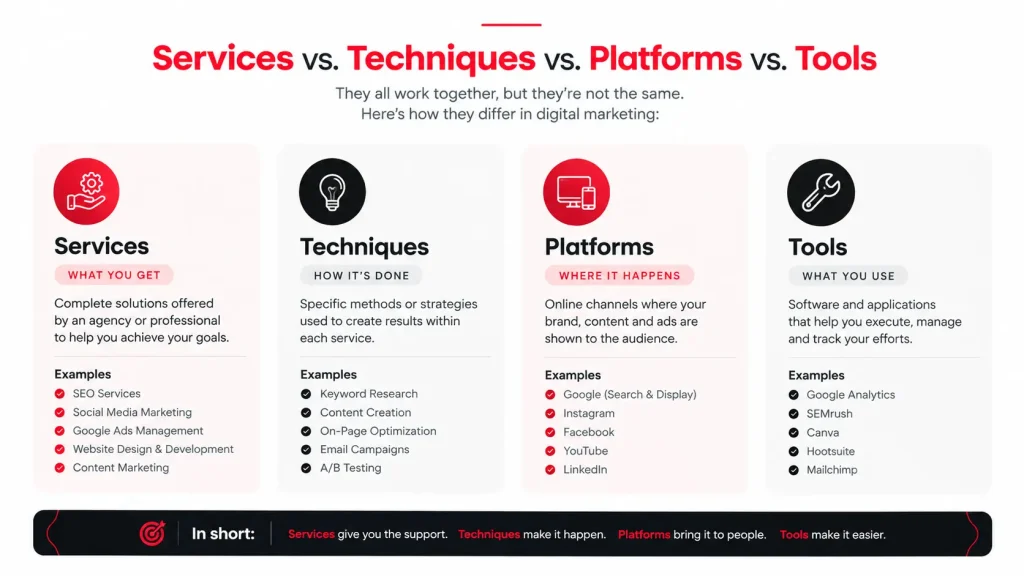
Services vs. Techniques vs. Platforms vs. Tools
These terms are related, but they do not mean the same thing.
-
Services: The work provided to a business, such as SEO, social media marketing, or website design.
-
Techniques: The methods used to achieve marketing goals, such as keyword research, audience targeting, and A/B testing.
-
Platforms: The digital channels where marketing takes place, such as Google, Instagram, Facebook, and LinkedIn.
-
Tools: Software used to perform or measure marketing tasks, such as analytics, keyword research, design, and scheduling tools.
Understanding these differences makes it easier to plan a marketing strategy.
What Are the Main Benefits of Digital Marketing?
Digital marketing can help businesses reach relevant audiences, communicate their offerings, attract potential customers, and measure campaign performance. Its usefulness depends on the business’s goals, audience, budget, and execution.
For a deeper explanation, read our guide on Why Is Digital Marketing Important for Businesses?.
Is Digital Marketing Right for Every Business?
Not every business needs every digital marketing channel. The right approach depends on where customers search for information, how they make decisions, and what the business wants to achieve.
For example, a local service provider may focus on local SEO and enquiry generation, while an e-commerce store may combine product content, paid advertising, and email marketing.
The best starting point is to identify your audience and goals before choosing specific channels.
Final Thoughts
Digital marketing is the process of promoting a business through online channels. It includes several areas, from SEO and social media to paid advertising, content, lead generation, and analytics.
You do not need to use every channel at once. Understanding the basics helps you choose the activities that best fit your business.
At DigiNexUp, we help businesses explore digital marketing solutions that align with their goals and online presence.
Ready to strengthen your online presence? Visit DigiNexUp to explore our digital marketing services.
Frequently Asked Questions
Find clear answers to common questions about our digital marketing services, timelines, pricing, and performance tracking.